Extended Benchmarking Notes
Earnings benchmarks are most effective when paired with process metrics. A monthly total alone rarely
explains whether performance is improving in a durable way. Process indicators such as conversion
quality, repeat purchase cadence, retention depth, and offer relevance reveal whether gains are likely
to persist. Without those indicators, teams may react to random variance as if it were structural
change.
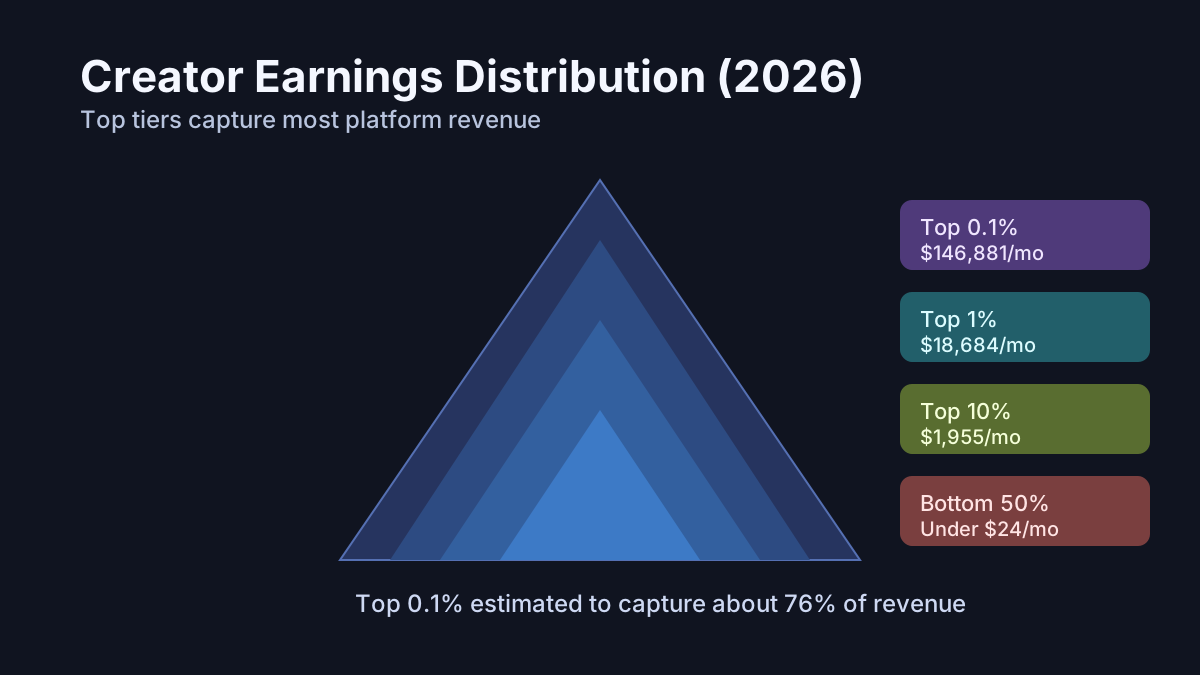
Distribution-aware analysis is equally important. In skewed ecosystems, top-tier outcomes can be
statistically accurate and simultaneously unrepresentative for most participants. Benchmark models
should therefore start with percentile-informed ranges rather than single benchmark targets. A range
approach reduces emotional volatility and encourages disciplined experimentation.
Cost structure should be tracked as closely as gross income. Platform fees are only one component.
Production overhead, messaging workload, campaign costs, tax treatment, and opportunity cost all
influence take-home outcomes. Two strategies with similar gross results can have very different
profitability profiles depending on operational discipline.
We also recommend periodic assumption audits. If conversion improves but retention weakens, revise
pricing and communication strategy instead of scaling spend immediately. If retention improves but
acquisition stalls, investment in discovery and brand positioning may be more effective than further
discounting. These trade-offs are why benchmark interpretation should be tied to system dynamics, not
isolated leaderboard narratives.
Readers using this page for strategic decisions should connect it with
audience dynamics and
monetization mechanics. That three-page sequence
helps explain not only what earnings look like, but why outcomes distribute the way they do.