Extended Audience Interpretation Notes
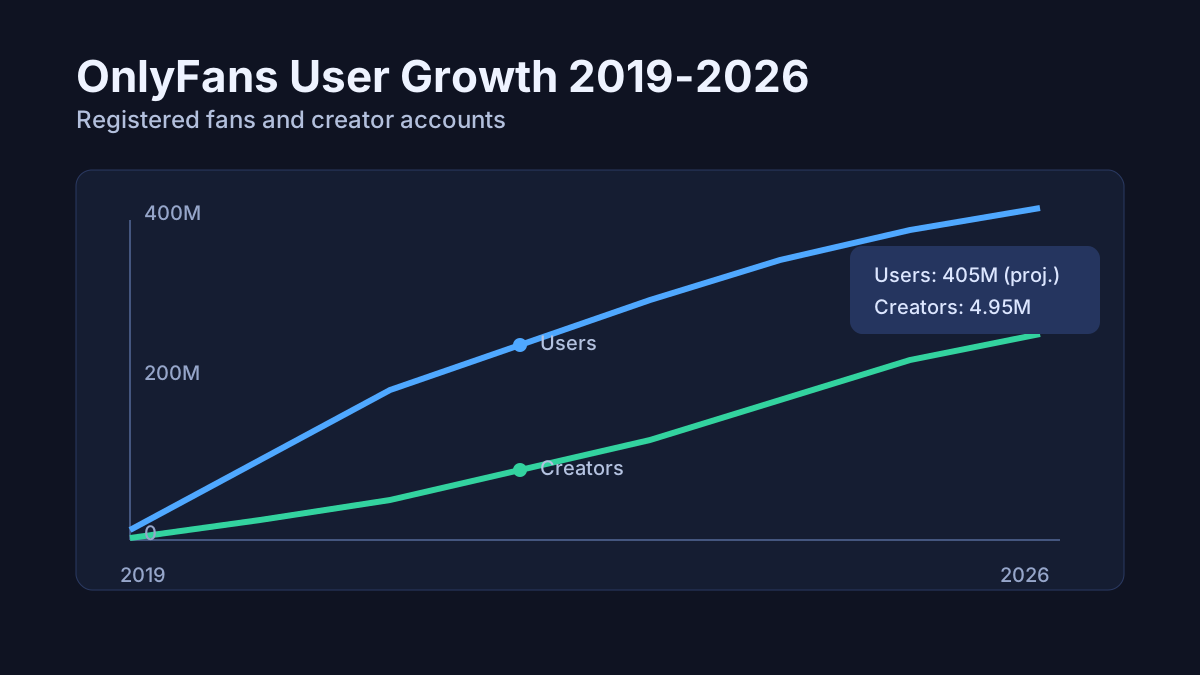
Audience statistics are most useful when translated into decision-ready questions. How much of growth
comes from new registrations versus stronger repeat activity? Are creator-side supply changes
concentrated in specific niches or distributed evenly? Do traffic and engagement shifts indicate
improving demand quality or only short-term attention spikes? By framing user data through these
questions, analysts avoid overvaluing single headline totals and can evaluate whether growth is likely
to sustain revenue outcomes over time.
Another practical issue is denominator drift. Teams sometimes compare conversion performance from one
period to another while quietly changing the user segment definition. For example, metrics built on
all registered users are sometimes compared against metrics built on active users, creating false
trend signals. We recommend documenting denominator choices directly in reporting notes so future
comparisons remain valid.
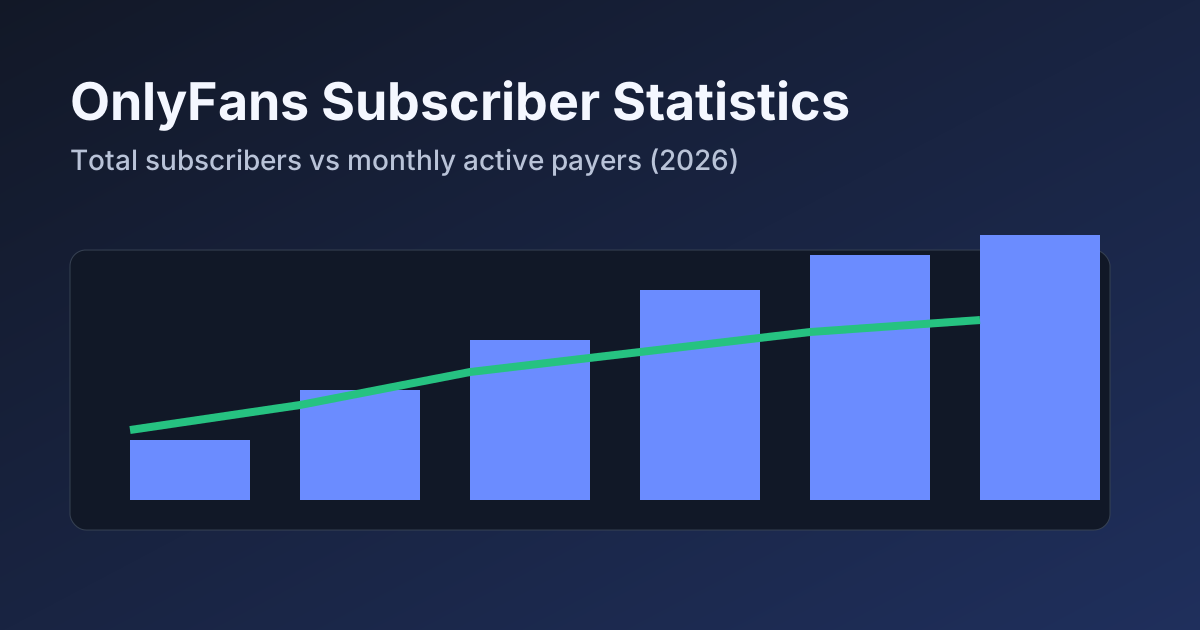
Demand depth should also be interpreted alongside behavioral cadence. A large account base with weak
revisit behavior may produce less durable value than a smaller base with stronger repeat engagement.
This distinction matters for both editorial accuracy and operational decisions. If your model assumes
that registrations directly translate into sustained spending, stress test that assumption against
retention and recency indicators before committing to targets.
In global audiences, regional composition can shift interpretation significantly. Growth from markets
with different payment behavior, content preferences, or regulatory constraints may alter monetization
outcomes even if total user counts rise. This is why broad user statistics should be treated as
directional context and not as universal guarantees across all subsegments.
Finally, user metrics should be reviewed in sequence with
revenue statistics and
creator earnings statistics. That sequence allows you
to test whether audience changes are translating into monetization quality and whether outcomes are
concentrated or broadly distributed. When those layers disagree, interpretation should prioritize the
full system view rather than whichever headline is most attractive in isolation.